


Everything feels too loud right now.
The headlines, the endless scroll, the churn of feeds—the constant swell of opinion and urgency. And if I’m not careful, my inner life begins to echo it—an ongoing commentary, a reflex to name and explain, to steady myself by turning experience into language, as if naming were a form of control.
I’ve always been a verbal processor. I reach for words to make sense of what I see and feel. And yet, my deepest knowings have arrived in the absence of language—when I’ve stopped asking, stopped trying to make sense of things in real time, and allowed myself to sit inside the not-knowing.
On this first glimpse of spring, I find myself wondering what it might mean to lower the volume.
At our farm, spring doesn’t arrive so much as it begins to loosen things. Light stretches across afternoons. The chill recedes degree by degree. The ground, sealed in frost just weeks ago, gives a little underfoot. There are small, improbable gestures everywhere: green shoots pressing up through cold soil, the first crocuses opening and closing again as if unsure of their timing, a thin hum of insects returning to the air.
If you weren’t paying attention, you might miss it entirely. Then one morning it would seem as though everything had bloomed at once—though the change had been gathering all along.
On my walks with the dogs, I’ve been trying to notice the in-between—the almost, the not-yet. The places where something is happening, but not announcing itself. A certain warmth to the light along the river. The way the trees hold their breath before leafing. The soft return of sound after a long stretch of winter quiet. It requires a different kind of attention—the kind that doesn’t reach immediately for meaning.
It makes me wonder how much else moves this way, just below the threshold of my awareness—obscured not only by the noise around me, but by the noise I generate myself.
Because not all of that noise is imposed. Some of it I cultivate. I fill my days, my calendar, my mind. I reach for distraction, for structure, for language. I try to get ahead of what I’m feeling by explaining it, as though understanding were something I could arrive at early, before the feeling has fully taken shape.
But what if the noise is not incidental, but intentional? What if it is how we avoid the parts of experience that cannot be managed or resolved?
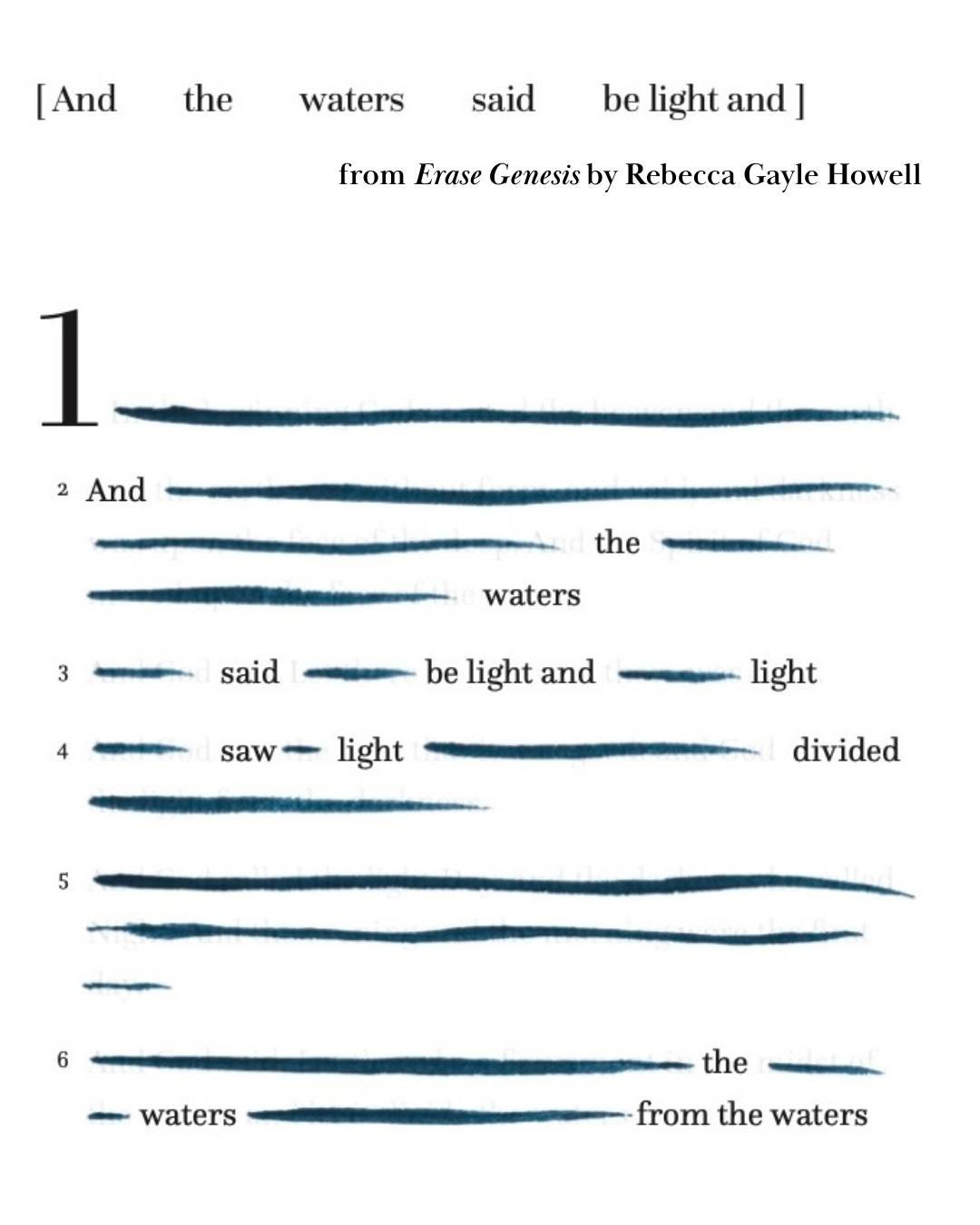
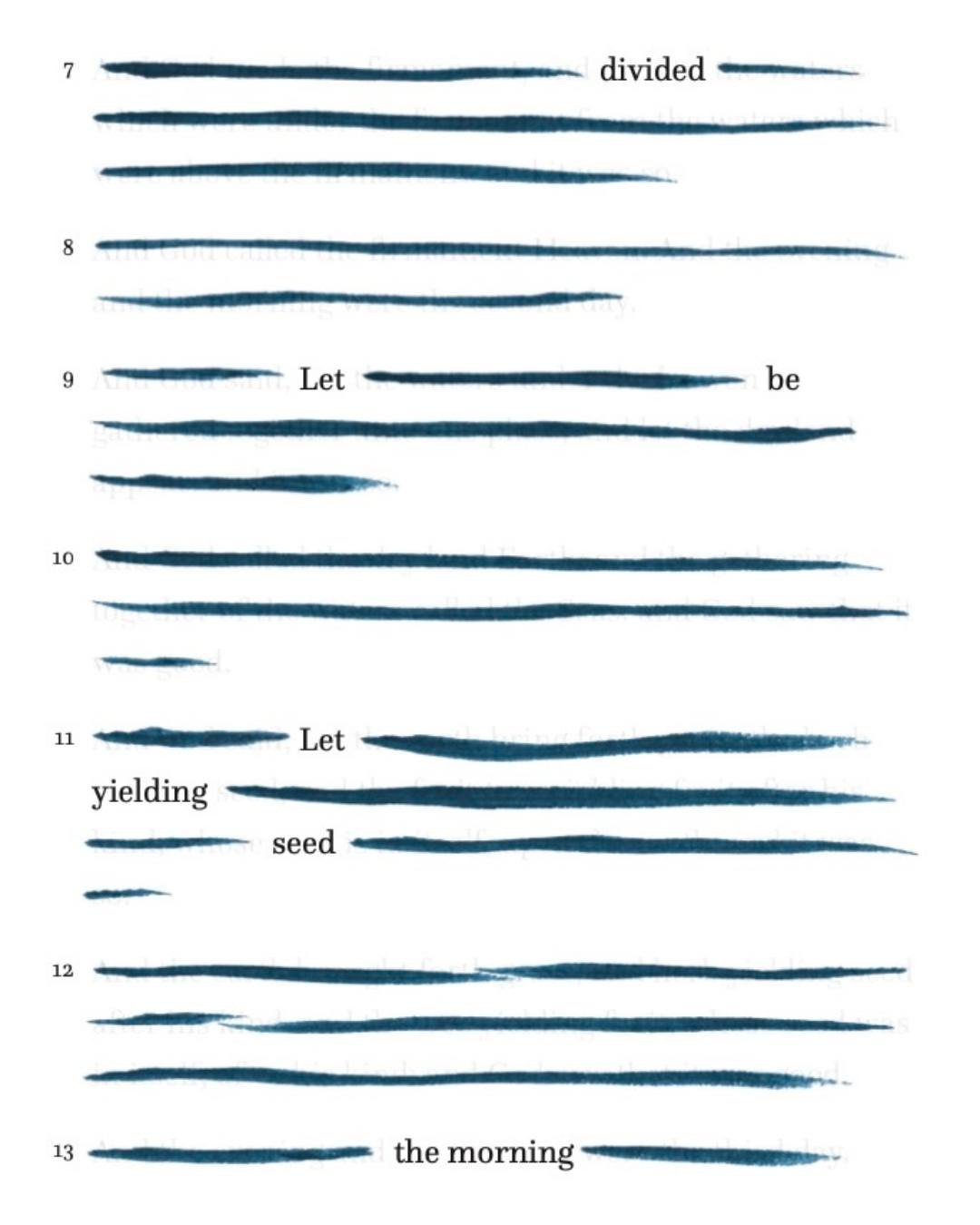
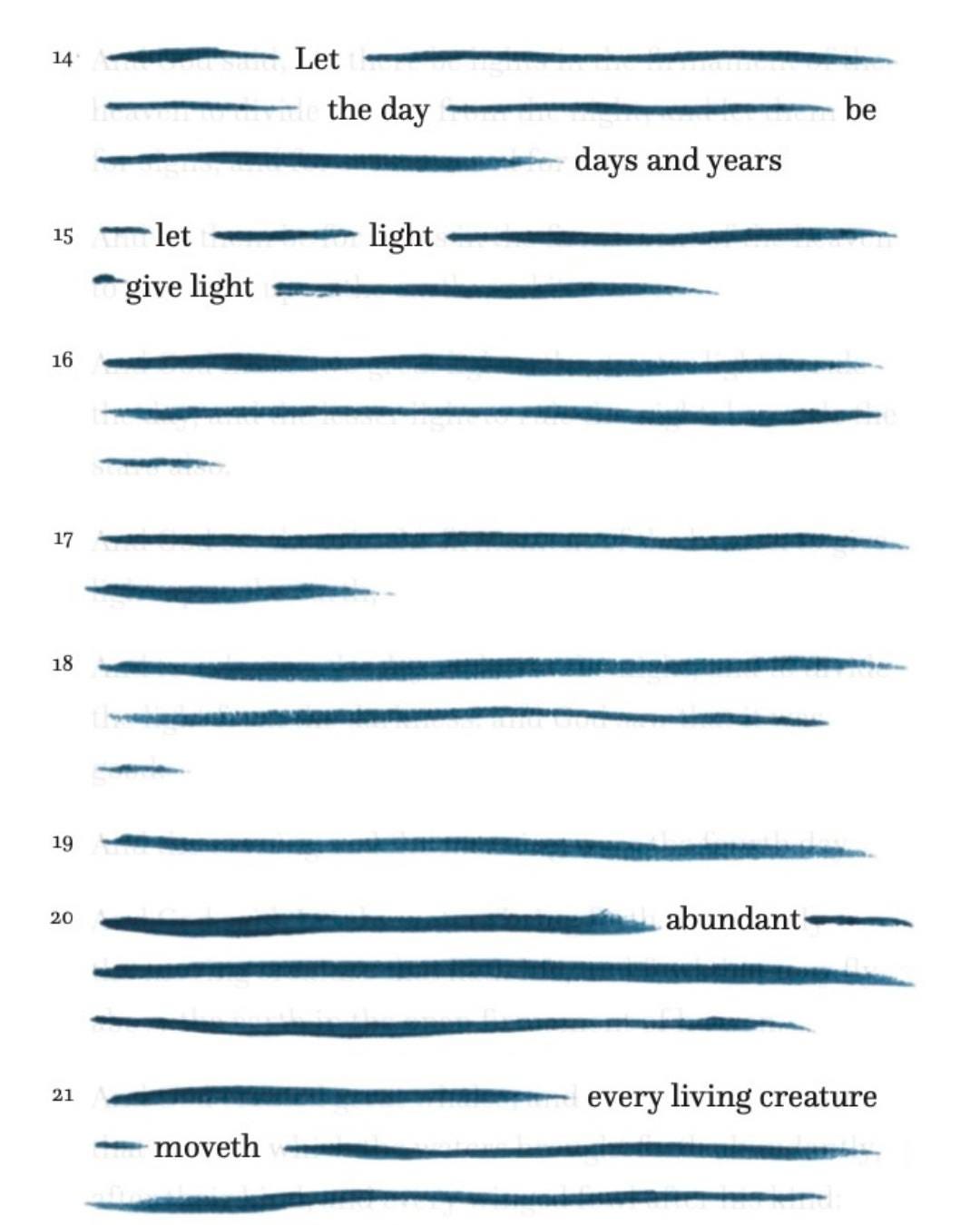
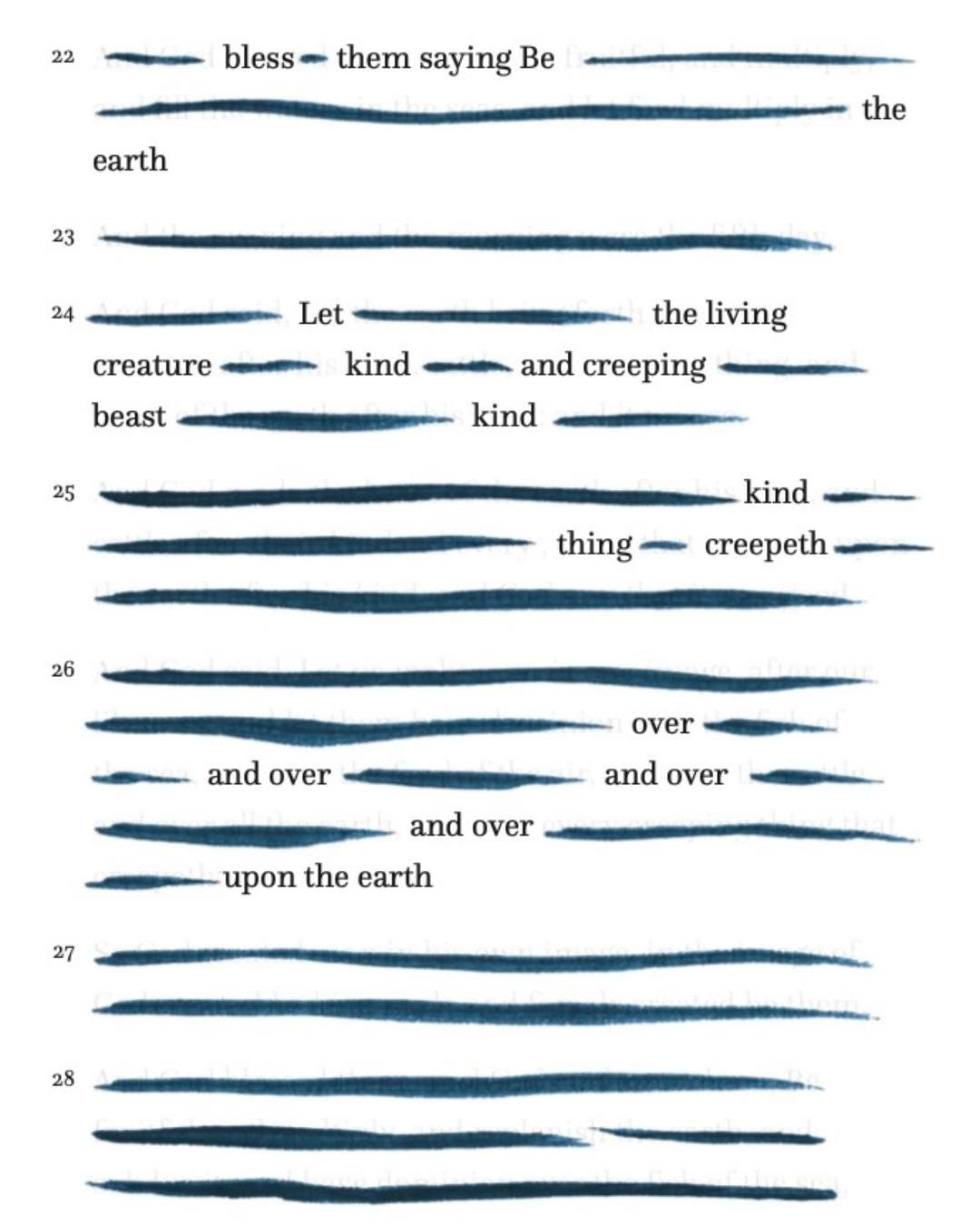
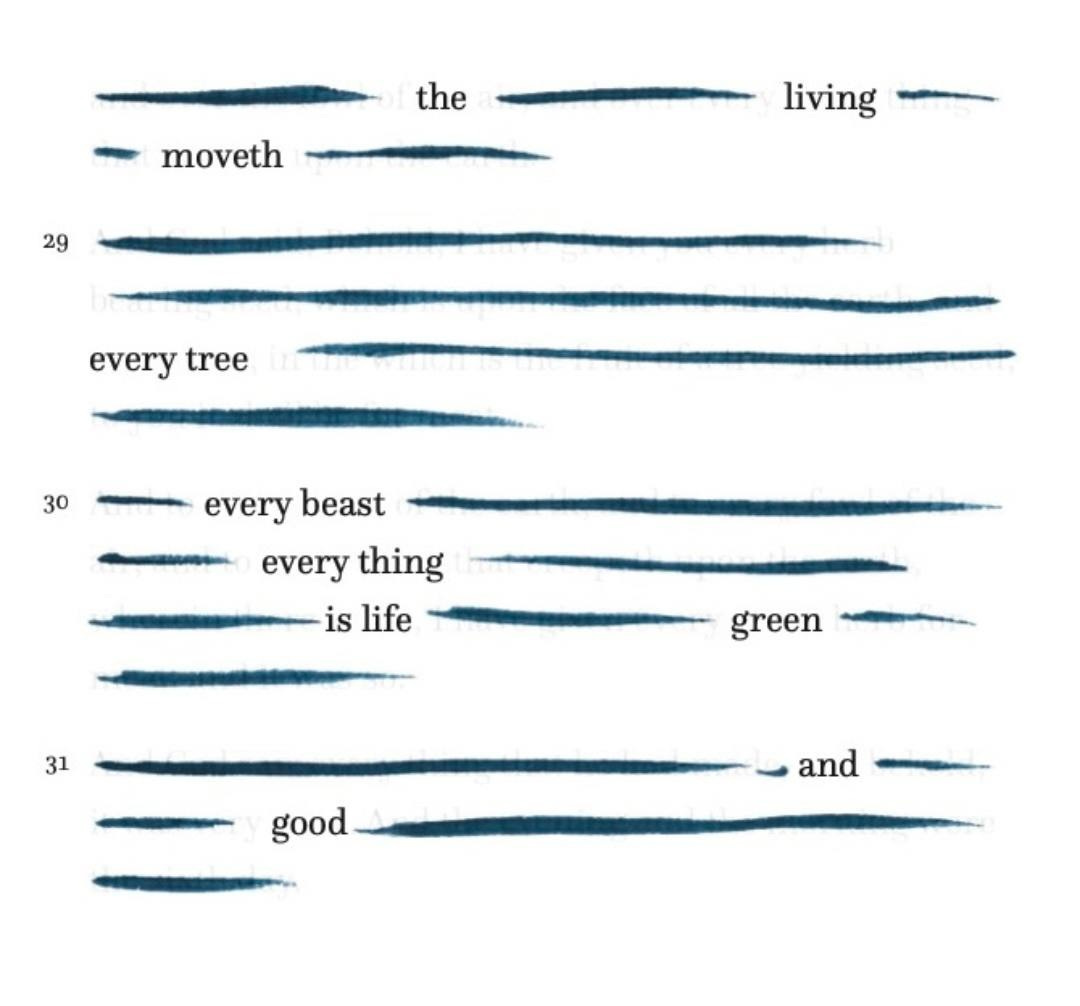
Today’s guest contributor, the poet Rebecca Gayle Howell, offers another way: silence not as absence, but as attention—a way of tuning ourselves to what is already there, waiting to be heard. A way of listening without interruption. In her essay—and in the erasure poem that accompanies it—she explores this kind of attention.
It’s a subtle shift, but not an easy one: to approach writing not as assertion—declaring, explaining, meaning-making—but as reception. To allow something to arrive, rather than forcing it into form.
Erasure poetry makes this visible. So much of writing asks us to add. Erasure asks us to remove—to let things fall away, to listen for what remains.
I think about the spaces that hold things together—the pause between notes in a piece of music, the silence that gathers in a conversation, the white space on the page where words can breathe and rest. Meaning lives there, too. It lives not only in what we say, but in what we leave unsaid.
In nature, nothing rushes. The shoots do not hurry themselves into bloom. The trees do not argue with the season. Everything emerges according to its own internal timing, which cannot be forced, only tended.
The promise of spring, to me, is not that we will become something new, but that we might become quiet enough to notice what is already beginning. That we might tend to what is emerging—not by insisting, but by paying attention.
Today’s prompt invites you to try that. To write, and then to take away. To listen for what reveals itself there.

Today, in community—
Our next Journaling Club gathering is happening today—Sunday, March 22, from 1–2pm ET. It’s the second in a two-part series about what happens when the examined life moves off the page and into community. We’ll share stories, write together, and listen for what emerges. Paid subscribers can find everything they need to join us here.
And if you’re not yet a paid subscriber, it’s not too late to become one and to join us.

Prompt 376. The Hand that Erases by Rebecca Gayle Howell
In the contemporary idiom, erasure poetry is most often used against texts. Texts that we need to challenge because of the lies they tell or the harm they cause. I respect many who engage the technique in that way, but it is not the tradition in which I work here.
In poetry—and to be honest, in my life—I increasingly want silence more than sound. In silence I feel tuned by a presence not my own, one kinder and smarter than me, of which I am a part, but not the whole. I do not need to ask things of this presence—and, in not asking, I do not interrupt its divinity. I listen. I receive, instead.
Thomas Merton defined prayer this way. He was a Trappist monk who lived in an abbey just twenty miles down the road from the small Kentucky town where I grew up. I never knew him, as he died seven years before I was born, but I read him voraciously in the first part of my life, and no book mattered more to me than Contemplative Prayer. In it, he writes:
In the “prayer of the heart” we seek first of all the deepest ground of our identity in God. We do not reason about dogma of faith, or “the mysteries.”… We learn recollection, which consists in listening for God’s will, in direct and simple attention to reality. Recollection is awareness of the unconditional.
Merton, too, was a student of poetry. I have come to believe, through my own study of the art, that poems are made of silence, not sound, that the sound arrives in the poem only to point like a fast arrow to the revelation hiding in the quiet, there between the lines and words.
“Only the hand that erases can write the truest thing,” wrote Meister Eckhart, another Christian mystic, whose writing Merton loved. In these words, I learn that we must let go of what we want to know—to find what we need to know. I have tried. As I worked, I found that what I needed to know aligns with a different passage from Eckhart: “Nothing in all creation is so like God as silence.”
Here I have practiced a poetry of silence that writes, not against, but alongside a text I have loved my whole life. I have come to these first three chapters of the Book of Genesis, repeatedly asking them to teach me that we can still be made in the likeness of God, that we can still learn how to be quiet, how to be with.
This is your prompt:
Erase Genesis begins with an epigraph from Meister Eckhart: “Only the hand that erases can write the truest thing.” Spend 10 minutes freewriting toward a truth that has been difficult for you to accept. Then, when you’re done, make an erasure poem of what you’ve written. What reveals itself in new ways, once you start lifting this truth into relief?

I’d love to know what this essay and prompt reveal for you. You can share in the comments—or keep it just for yourself.



Today’s Contributor—
Rebecca Gayle Howell’s work has received critical acclaim from such outlets as The Los Angeles Times, Poetry London (U.K.), Asymptote, Limelight (AUS), Publisher’s Weekly, MINT (India), Ms. magazine, and The Kenyon Review, and she has been translated into Spanish and German. Among her awards are the United States Artists Fellowship, two winter fellowships from the Fine Arts Work Center in Provincetown, and the Aiken Taylor Award for Modern American Poetry. Howell’s most recent book is Erase Genesis, available for pre-order from Project Poëtica/Bridwell Press. She writes the newsletter Behold.

For more Inspiration—
Creation Through Elimination
What happens when writing asks you to take things away instead of add? An essay and prompt on the paradox of erasure poetry by Natalie Warther, with examples by Mary Ruefle, Tom Phillips, and Jenny Holzer.
Shame Shepherds & Grace for Fuck-Ups
A letter from Calvin, incarcerated since age 18, who longs to tell his story but can’t get past the weight of shame. In this installment of my advice column, Dear Susu, I gather wisdom from a shame shepherd, a writing mentor, and a pen pal on death row on how to begin anyway.
On Moons, Birds, & the Color Green
A glimpse into our Creative Hour—on artistic preoccupations, the beauty of repetition, and the quiet return of spring. We spend time with a poem by Ross Gay and write into its promise.

Hello All. Thank you so much Suleika. The title had me. And from all of the readings these beautiful gems: "The promise of spring, to me, is not that we will become something new, but that we might become quiet enough to notice what is already beginning." "That we might tend to what is emerging—not by insisting, but by paying attention."
"Everything emerges according to its own internal timing, which cannot be forced, only tended."
"To allow something to arrive, rather than forcing it into form."
"We learn recollection, which consists in listening for God’s will, in direct and simple attention to reality. Recollection is awareness of the unconditional."
I have been with so much medical and hospitals this week again. I had multiple scans. And then Friday had to take my mom to the ER and they were so swamped and we were there 10 hours. I am grateful for how they took good care of my mom and she is back to her facility. I also attended my first virtual support group for my rare cancer and I am overwhelmed with resources. And so I really want to hear more about journaling groups. And today is going to be 65. And so my husband and I are going for a slow walk in woods. I am so grateful fo each of you. Take care.
An erased poem found inside the uncontrollable world of my mom’s dementia.
Loss, like love whispered. Her soul, clear, familiar, a force. Its welcome sun still rumbling on.
*Thank you for this healing prompt. ❤️