

A few months ago, I was sitting with Jennifer Garner in her living room, the two of us holding mugs of tea, pulling prompts from a bowl. A two-person journaling club, if you will. We took turns—reading, then answering, then trading stories back and forth.
We landed on a prompt about gifts. She told me about something her daughter had given her—a stack of small squares of paper, each one labeled across the top with the same heading: Mama was right.
Mama was right. I do love my driver’s license.
Mama was right. Siblings are the best.
Line after line, a catalog of recognitions—less about advice taken than a shift in understanding: You were right in ways I couldn’t yet see. Jen told me how much it meant, especially in the years when a child’s job is more or less to push back. To test boundaries. To begin tracing out their own edges.
I thought about the “gifts” I gave my own parents as a kid: elaborate coupons made from construction paper for vacuuming the car, cleaning the house, cooking dinner. Grand promises, negligible follow-through. My mom still teases me about them, which in retrospect feels earned.
I thought, too, about something my mom used to say to me when we were butting heads during my difficult teenage years: Un jour, quand tu seras plus grande, tu comprendras. (One day, when you’re older, you’ll understand.) I was certain I wouldn’t. Or at least, not in any way that would require me to concede the point.
I love the idea that a gift can disclose itself over time. A gesture, a phrase, a small object that accrues meaning, until one day you find yourself holding it differently.
What moved me most about Jen’s story wasn’t the cleverness of the gift so much as the humility in it—the willingness to say: you taught me something. To return, in some small way, the care that was given without any guarantee of recognition. To see, and to say so—especially when you once couldn’t.
It makes me think about the ways love is carried—sometimes in words, sometimes in objects, sometimes in the things we keep and keep returning to, long after the moment has passed. This time of year, we tend to name those forces—mother, parent, caregiver—but as Rebecca Solnit has written, mothering might be better understood as a verb: something we do, again and again, often without knowing how—or whether—it will be received.
In this week’s guest essay, which appears in The Book of Alchemy, Beth Kephart writes about one such object—a gift that endures, even as everything around it changes. It’s one I return to often.
May it help you find something you’ve kept that has been keeping you.

Coming up—
If you’re interested in hosting your own Journaling Club—whether it’s you and one friend around the kitchen table or a group of strangers in your new city—I’m offering a seminar where we’ll explore what it takes to put together this particular type of gathering.
It’s happening on Wednesday, May 20 at 12pm ET—and I’ll be joined by my friend, the conflict resolution and gathering expert Priya Parker.
The live seminar is free and open to all; paid subscribers will receive the recording. Save the date!

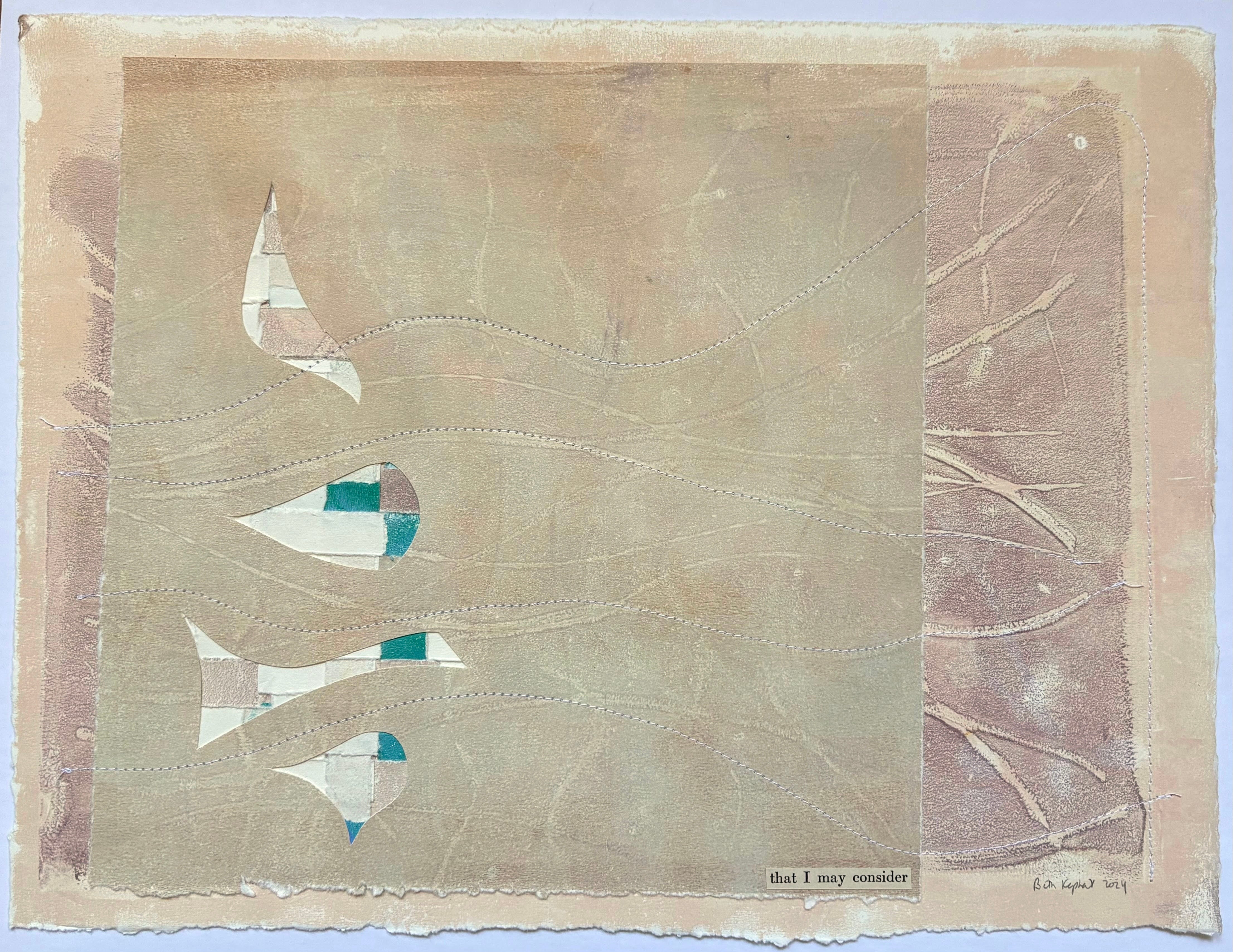
Prompt 383. The Gift Giver by Beth Kephart
My mother believed in birthdays. One cake, two cakes, three—some cakes tall and some cakes square, some cakes with wax paper-covered coins slipped between the layers. She believed in balloons and ribbon curl, and for a while, when her three children were small, she believed in accompanying the big day with something stuffy and homemade, something she’d crafted at who knows what hour on her trusted Singer.
My stuffed Humpty Dumpty sat (legend has it) atop the cake (was I three? was I four?), though there must have been a bit of saran wrap or foil between his egg-shaped behind and the frosting, for there, in that one place, are no telltale stains. The stains, the dirt, the years, are everywhere else—watermarks and split seams, a smile that has lost a stretch of lip, a lost ankle ribbon. Today this tattered Humpty takes its vaunted place in an old wooden cart carried forward from my husband’s Salvadoran youth. Humpty is going nowhere in its cart.
As the years passed, I tried to equal my mother’s gift—to find, in keepsake shops, Humpties intricate and interesting enough to surprise her, I do mean please her. I found, over the course of decades, just four ingeniously crafted Humpties, which I bought and wrapped and gave to her—it never mattered when or in which season. After she passed away, I brought her Humpties home.
My mother has been gone for seventeen years. Photographs don’t return her to me as vividly as this minor collection of Humpties—these eggs in various stages of tumult. Lately, missing my mother, working through all the complications that defined our relationship, I’ve been pondering Humpty, this humble nursery rhyme character who, fallible and shattered, could not be pieced together again. Not by the king’s horses. Not by the king’s men.
I think of how my mother must have spent hours stitching her Humpty for me. I think of the hours I spent searching for Humpties for her. I think of how everything shatters in the end, but how love’s first wish is to make what is broken whole again.
This is your prompt:
Write about a gift that you received that in some way defined your relationship with another. Where is that gift now (or where did it go)? What does it tell you about who you have become?

I’d love to hear what this prompt brought up for you. Feel free to share in the comments.

Today’s Contributor—
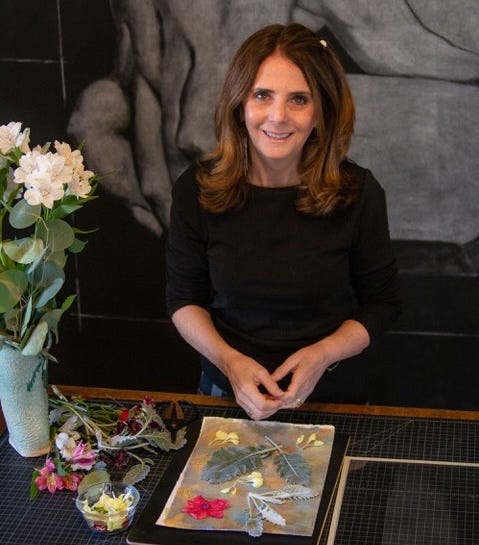
National Book Award finalist Beth Kephart is the award-winning author of some 40 books in multiple genres, an award-winning teacher, a paper artist, and the author of the bestselling Substack The Hush and the Howl, where she writes of life, story, and art. My Life in Paper: Adventures in Ephemera was a finalist in the 2025 Pattis Family Foundation Creative Arts Book Award. “Conversations with Women in Blue” won the 2025 Creative Nonfiction Prize from The Porch. In June 2026, Beth and her artist husband are offering a unique workshop series focused on the quest for beauty, love, and remembrance; writers will have a chance to share their work in real time in small-group settings.


I sat down with Jennifer Garner to talk about journaling when life gets hard—what it holds, what it reveals, and what comes next.
Also: some truly unhinged closed-eye giraffe drawings. Watch here.
I am a longtime single father through sudden tragedy. My daughter was killed at age six by an impaired driver. “Rage, rage against the dying of the light.”Most of what I learned about being a father, I learned through mothers in specific and women in general. I watched. I sat. I listened. I learned. I studied Mother Mary (I am a Protestant pastor) and Mother Teresa. Mary also lost a child in a violent and unjust way. Somehow, I came to be able to say, “I am grateful” not for what I endured, but for the love I learned and the spiritual gifts I received. My daughter’s name was and is Maya. - Dwight Lee Wolter.
It always seems like the greatest gifts are the ones in which we are given insight to see we have mattered somehow, which is why these gifts of acknowledgement, time or appreciation hit the heart so deeply. Because they say: you matter, you impacted someone/thing, you have value and worth, and I SEE YOU!!
The most precious gifts I have ever received were the quiet ones that showed me someone took time to think about how I meant something to them in a way I didn’t expect. The unexpected message. The note left somewhere random. The responsibilities put aside to share time together. A glance across a room. A kind word of encouragement. It makes me want to pay it forward, to extend those kindness to others, fully understanding how meaningful it can be.